
China's Office and Commercial Furniture Industry Transitions Toward "Low-Carbon and High-Value" Development
Phase II of the 57th China (Guangzhou) International Furniture Fair—specifically the Office, Commercial, and Equipment & Materials Exhibition—was held from March 28 to 31 at the Canton Fair Complex in Guangzhou. Exhibiting enterprises have firmly anchored their strategies in core directions such as sustainability and smart technology, showcasing a wide array of distinctive office and commercial products that highlight the successful "low-carbon, high-value" transformation of China's office and commercial furniture industry.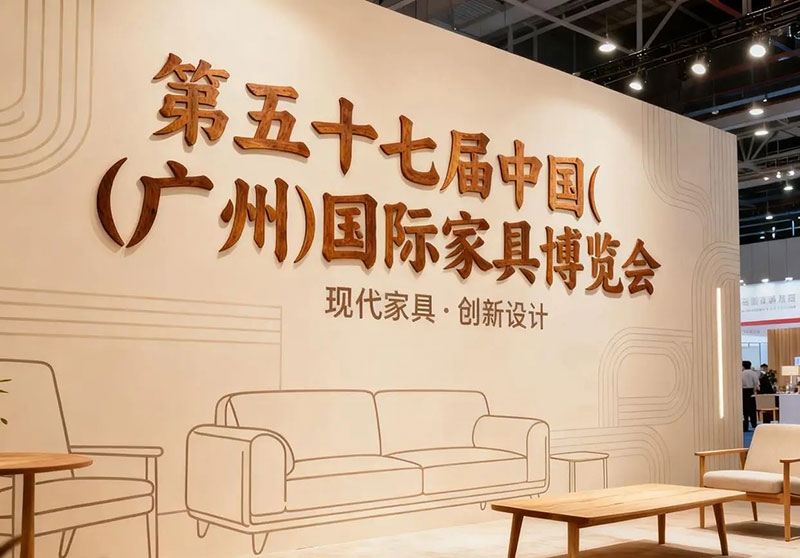
This exhibition features a dedicated commercial office zone spanning 240,000 square meters, comprising three distinct sections: Office Environments, Public & Commercial Spaces, and Office Seating. By establishing a comprehensive model for green office ecosystems, the event ensures full coverage of sustainable practices—ranging from material innovation and product design to spatial application—thereby positioning green sustainability as the central theme for the upgrading of office spaces.
During the exhibition, reporters observed that the Office Environments zone prominently showcased eco-friendly office furniture, energy-efficient office systems, and holistic low-carbon spatial solutions. Numerous leading brands have deeply integrated net-zero carbon practices into their office scenarios while simultaneously expanding into high-growth sectors such as healthcare and elderly care; here, they displayed age-friendly eco-furniture, smart nursing beds, and integrated green wellness spaces.
Featuring smart adaptive seating, dynamic-balance office chairs, and eco-friendly breathable smart seats, the Office Seating zone focuses on innovative trends such as adaptive technology, dynamic support, and breathable eco-materials. By seamlessly blending eco-friendly renewable materials and low-emission manufacturing processes with ergonomics and smart technology, this section integrates green, low-carbon philosophies into the core touchpoints of professionals' daily work lives. Meanwhile, the Public & Commercial Spaces zone targets diverse commercial settings—including schools, healthcare facilities, hotels, commercial complexes, and transportation hubs—highlighting a range of cutting-edge products such as modular rapid-assembly systems and low-carbon commercial furniture.
This exhibition was dedicated to establishing itself as a premier launchpad for new industry products, with over 87% of participating companies unveiling new offerings. Notably, the Equipment and Materials Zone pioneered a "Global Premiere Ceremony," bringing together ten industry leaders to debut 24 strategic new products on-site—a showcase that integrated cutting-edge intelligent manufacturing technologies such as AI, unmanned factories, flexible manufacturing systems, and MES production management systems. Meanwhile, the Office and Commercial Furniture Zone hosted the China debut of numerous internationally acclaimed designs and, for the first time, integrated smart scenarios with service solutions to create the "CIFF Smart Reception Lounge."
The China (Guangzhou) International Furniture Fair continues to amplify its global appeal and international convergence effects. For this edition, the number of overseas exhibitors rose by 1.2% year-on-year, while the exhibition area expanded by 5.1%. Leading global brands—such as Sweden’s IKEA and Japan’s Kokuyo—made their debut appearances, accelerating the introduction of cutting-edge global products, advanced technologies, and high-end resources. This initiative serves a dual purpose: establishing a platform for domestic Chinese enterprises to benchmark themselves against international standards, while simultaneously opening up vital channels for global brands seeking to enter the Chinese market.
Ranging from the debut of innovative technologies and new products to the convergence and collaboration of international forces, this exhibition utilizes innovation as a unifying thread. By integrating the entire value chain—encompassing original R&D, technological commercialization, and industrial convergence—the event empowers China's furniture industry to transcend traditional development models and drives the sector to continuously ascend toward the higher echelons of the global value chain.